How Hedge Funds and Quant Investors Use AI
Machine learning has given quantitative funds new tools for finding patterns in data, but the core lesson for long-term individual investors — don't try to compete with this — hasn't changed.
Quant investing is older than you might think
Quantitative investing — using statistical models rather than individual human judgment to make investment decisions — has existed since at least the 1970s and 1980s, well before anyone used the term artificial intelligence in a financial context. Strategies like statistical arbitrage (finding pairs or baskets of securities whose prices have historically moved together and betting on their relationship reverting when it diverges) and factor investing (systematically tilting a portfolio toward characteristics like value, size, or momentum that have historically been associated with certain return patterns) are decades-old techniques that remain widely used today. Modern machine learning and AI methods are best understood as an addition to this existing toolkit — new ways of finding and exploiting patterns in data — rather than a wholesale replacement for it.
What this looks like in practice
At a high level, three areas are where AI has made the most visible difference for quantitative and algorithmic funds. First is pattern recognition across datasets too large or too unstructured for traditional statistical models to handle well, including satellite imagery, credit card transaction data, and shipping records, used to estimate things like retail sales or economic activity ahead of official reporting. Second is natural-language processing applied to text: scanning news wires, earnings call transcripts, and regulatory filings for sentiment or subtle changes in language far faster than a human analyst could. Third, and less glamorous but arguably more consequential day to day, is execution — using models to decide how to break up and time large orders so they move markets as little as possible, which can meaningfully affect a fund's realized returns even when the underlying investment thesis is unchanged.
- Pattern recognition across large, often unconventional datasets (satellite imagery, transaction data, web-traffic data).
- Natural-language processing of news, filings, and transcripts to gauge sentiment and detect changes in disclosure language.
- Execution optimization — deciding how and when to place large orders to minimize market impact.
Why this mostly doesn't change what you should do
It's tempting to conclude that if sophisticated funds are using AI, individual investors need AI-powered tools too in order to keep up. In practice, the opposite lesson generally holds. These strategies tend to operate on very short time horizons — sometimes holding positions for seconds or days rather than years — and depend on infrastructure most individuals will never have access to: low-latency connections to exchanges, large teams of specialized engineers and researchers, and access to expensive, sometimes proprietary datasets. A fund's edge, when it exists, often comes from a narrow, hard-to-replicate combination of speed, data access, and scale, not from a tool an individual investor could plausibly rent or subscribe to.
The point of understanding how quant funds use AI usually isn't to copy them — it's to understand why competing with them at their own game is rarely worthwhile.
The practical takeaway
For a long-term individual investor, the more durable lesson from the rise of AI-driven quantitative trading is one that predates AI itself: broad, low-cost index funds are a reasonable way to participate in market returns without trying to out-trade participants who have far more data, speed, and computing power. That doesn't mean AI has no relevance to how individuals invest, but it does mean the relevant question for most people is rarely 'which AI tool should I use to trade,' and much more often 'how do I build a diversified portfolio and leave it alone.' This article is general educational content, not investment advice, and does not recommend any specific fund, strategy, platform, or security; consider your own circumstances or speak with a qualified financial professional before making investment decisions.
This article is educational and general in nature. It isn’t personalized investment, tax, or legal advice — always weigh your own circumstances, or talk to a licensed professional, before making financial decisions.
Keep reading
Related guides on this topic.
 Trading & Technical Analysis
How AI Is Changing the Way Markets Trade
Computers have been trading markets for decades. Here's what's genuinely new about AI in finance, what isn't, and why it matters less than you'd think for a long-term investor.
 Legendary Investors
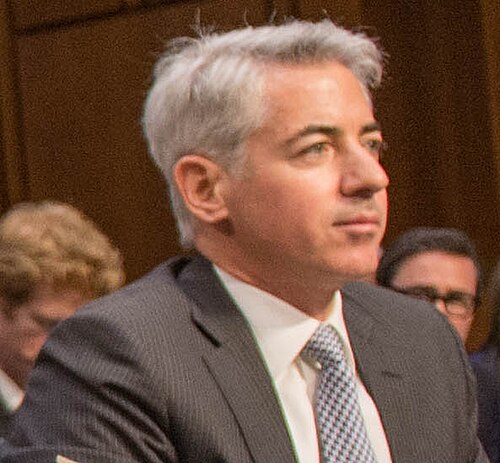
Bill Ackman: Activist Investor, Big Wins and Bigger Fights
Bill Ackman built Pershing Square from $54 million in 2004 into a firm managing about $28 billion, through concentrated bets, public campaigns and some spectacular wins and losses. In 2026 he took it public in New York.
Legendary InvestorsLuis Stuhlberger: Brazil’s Fundo Verde and the Manager Who Made 26,000%
Luis Stuhlberger’s Verde fund turned R$1 million in 1997 into one of Brazil’s most famous investment records, about 22% a year for more than two decades. How he did it, and why even his fund has struggled since 2021.
 Trading & Technical Analysis
The $25,000 Pattern Day Trader Rule Is Gone: What Replaced It in 2026
In April 2026 the SEC approved FINRA’s plan to scrap the pattern day trader rule and its $25,000 minimum. What replaced it, when your broker has to switch, what still applies to small accounts, and why easier day trading is not the same as better odds.
 Trading & Technical Analysis
What Is a CFD (Contract for Difference)? How CFD Trading Works, and Its Risks
A contract for difference lets you profit or lose from a price moving up or down without owning the asset, using leverage. Here is how CFDs work, a worked example, the costs that build up, the rules that protect retail traders, and why most of them lose money.
 Trading & Technical Analysis
Day Trading Statistics: What the Research Actually Shows
What share of day traders actually make money? Three of the most cited studies — from Brazil, Taiwan and the United States — what they found, and what they have in common.