Trade Republic Review 2026: Fees, Safety, Interest on Cash and Who It Suits
A €1 order fee, free savings plans and interest on uninvested cash have made Trade Republic one of Europe’s largest brokers. Here is what it really costs, how your money is protected, and where it falls short.
What Trade Republic is
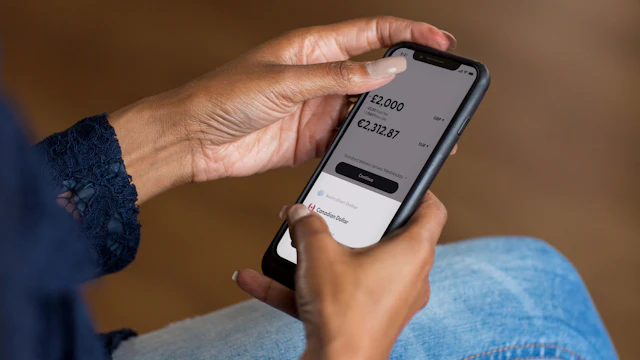
Trade Republic is a Berlin-based broker that launched its app in 2019 and grew on a simple proposition: invest from a phone for a flat euro per order, or for nothing at all through regular savings plans. It is no longer a small fintech. It received a full German banking licence at the end of 2023, said in December 2025 that it had more than 10 million customers and over €150 billion in assets, and sold existing shares that month at a valuation of €12.5 billion. It now serves 18 European countries and has opened local branches to offer national bank details and local services, including France, Spain and Italy in January 2025, Austria and the Netherlands later that year, and Portugal in July 2026. It is not available to residents of the United Kingdom, Switzerland or the United States.
What it costs
- Shares, ETFs and bonds: €1 per order on the standard Best Price route, plus the spread and any third-party costs.
- Direct Price orders, introduced in July 2026: €2 per order, letting you choose one of 30 exchanges, including Xetra, Euronext, the NYSE and Nasdaq.
- Savings plans into shares and ETFs: no order fee, with a minimum per execution that is €1 in most countries but higher in some local price lists.
- Crypto: €1 per order, with most of the real cost sitting in the spread.
- Currency: shares are traded in euros. For US shares the conversion is built into the price, with a published margin of US$0.0014 per unit, about 0.12% at recent exchange rates, and dividends paid in other currencies are converted into euros with a small premium.
- Account, custody and withdrawals: no fees. The virtual card is free; a physical card costs €5, or €50 for the Mirror version, and cash withdrawals are free from €100, with €1 charged below that.
The €1 fee is easy to understand but not the whole cost. Every purchase also pays a spread, the gap between the buying and selling price, and for less liquid shares, crypto or orders placed outside main trading hours that gap can cost more than the fee. Since the European Union’s transition period for payment for order flow ended on 30 June 2026, Trade Republic has routed orders through a Best Price system that searches several exchanges for the best available quote, and it obtained a licence in January 2026 to run its own trading venue. Proportion matters too. A monthly ETF savings plan costs close to nothing in explicit fees, while €1 on a single €50 order is 2% before the market moves. The cheapest way to use the service is the way it was designed: regular, automated investing rather than frequent small trades.
Interest on cash
Uninvested cash earns interest linked to the European Central Bank’s deposit rate. After the ECB raised that rate to 2.50% in September 2026, Trade Republic lifted its standard rate from 2.25% to 2.50% a year from 16 September, with no cap, calculated daily and paid monthly, while in several countries, including Portugal, Spain and Italy, it has offered 3% to newer customers on balances up to €50,000. Rates and conditions change with the ECB and by country, so check your own country’s page. Interest is taxable, and in some countries, including Portugal and Germany, tax is withheld automatically.
Is Trade Republic safe?
Trade Republic is a German bank supervised by BaFin and the Bundesbank, so it works under the same capital and conduct rules as other German banks. Where your money sits still matters. Customer cash is spread across trust accounts at several partner banks, including Citibank Europe, Deutsche Bank and J.P. Morgan, and partly invested in money market funds: deposit protection of up to €100,000 applies per depositor at each partner bank, while the money-market-fund portion is not a bank deposit at all. A German consumer organisation sued over how this was advertised, and the case was settled in July 2026 with Trade Republic agreeing to stop the statements. Shares, ETFs and bonds are held separately from the company’s own assets, through HSBC in Germany with custody at Clearstream in Frankfurt, so they are not available to its creditors if it fails, and the company says it does not lend out customers’ securities. German investor compensation covers 90% of losses up to €20,000 only if securities go missing. Crypto is held in cold storage by BitGo Europe under the EU’s MiCA rules, but it is not covered by any compensation scheme. The structure is that of a regulated bank; the risks that remain are the ordinary ones of markets, crypto and leveraged derivatives, plus the service problems described below.
The app, the tools and tax
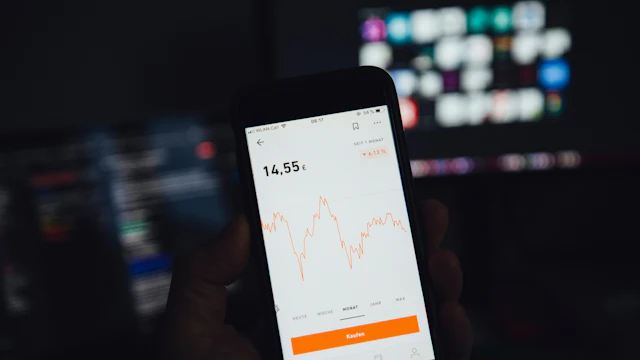
Trade Republic is built around its app, with a web version and, since July 2026, an advanced web terminal offering charting, screeners and live market data at no extra cost. The range covers shares, ETFs, bonds, crypto with a wallet and staking, warrants and other securitised derivatives, and private-market funds offered with partners since 2025, although there are no listed options or futures. A debit card pays 1% Saveback into investments on card spending, subject to conditions such as an active savings plan, and a round-up feature invests spare change. Tax handling depends on where you live. Trade Republic deducts German taxes automatically for German customers and has added local features elsewhere, including automatic tax handling in Austria and an Italian option in which the broker acts as tax withholding agent. In Portugal, interest paid into accounts with Portuguese bank details has 28% tax withheld, but customers should not assume dividends and gains are handled for them, and should check what annual statements cover before tax season.
Plain Investor score
Trade Republic
Scores reflect Plain Investor's own methodology as of September 2026 and are not personalized advice. Plain Investor is not affiliated with, sponsored by, or paid by Trade Republic. Always verify current fees, regulation, and features directly with the broker before opening an account. Methodology · How we make money
Trade Republic’s pitch fits in one line — a euro an order, free monthly plans and interest on the cash in between. The trade-off is that you are the customer of an app, not of a full-service broker.
Where it falls short
Growth has strained service. Complaints rose sharply in 2025, an outage hit customers during the April 2025 tariff sell-off when many wanted to trade, and dividend payments were delayed in 2024. The company has since added round-the-clock phone and chat support and hired more than a thousand support staff, but it remains an app-first service in which a phone call is not where most problems get solved. The toolset suits long-term investors better than active traders, with no listed options or futures and fewer research resources than full-service brokers. Tax reporting outside Germany ranges from well integrated to do-it-yourself depending on the country, and nothing here is available to UK residents.
Trade Republic vs the alternatives
The closest rivals depend on what you want. Trading 212 charges no order fee at all and is open to UK residents. eToro adds copy trading and a wider crypto range, but charges 0.75% to convert currency. DEGIRO competes on low fees for one-off trades on major exchanges, while Saxo Bank and Interactive Brokers offer far more markets, products and currencies for larger or more active investors, at the price of more complexity. We compare Trade Republic head to head with Trading 212, eToro and Saxo Bank in separate guides, with the fees worked through on real examples.
Who it suits
Trade Republic suits European investors who want to put money into ETFs or shares every month at minimal cost, keep cash earning interest in the same app, and rarely need to speak to anyone. It suits less well active traders who want options, futures or advanced order types, investors who need comprehensive tax reports in a country where the service offers few local features, and anyone outside its 18 countries. Under our published methodology it scores 4 out of 5 for Costs & Fees, 3 for Platform & Tools, 4 for Regulation & Trust, 3 for Asset Range and 3 for Account Access & Support. Fees, interest rates and features change frequently and vary by country, so confirm current terms on Trade Republic’s own site. This review is general education, not personal financial advice.
See how Trade Republic compares
Line it up against DEGIRO, Trading 212 and other European brokers on the same scores.
This article is educational and general in nature. It isn’t personalized investment, tax, or legal advice — always weigh your own circumstances, or talk to a licensed professional, before making financial decisions.
Keep reading
Related guides on this topic.
 Broker Reviews
Trade Republic vs Trading 212 (2026): Fees, Interest on Cash and Which Suits You
Two of Europe’s most popular investing apps, compared on what matters: order fees, currency costs, interest on cash, protection, products, tax handling and service, with the figures as of October 2026.
 Broker Reviews
Trade Republic vs eToro (2026): Fees, Safety and Which Suits You
Trade Republic is a German bank built around cheap savings plans and interest on cash; eToro is a social-trading app with copy trading, crypto and CFDs. Here is how they compare on fees, currency costs, protection, tax and who each suits, as of October 2026.
 Broker Reviews
Trade Republic vs Saxo Bank (2026): Low-Cost App or Full-Service Bank?
Both are licensed European banks, but Trade Republic is a €1-per-order app for savers while Saxo Bank is a multi-market platform for larger and more active investors. Here is how they compare on fees, currency costs, products, protection and who each suits, as of October 2026.
 Broker Reviews
eToro vs Saxo Bank (2026): Fees, Safety and Which One Suits You
eToro is a social-trading app built for simplicity; Saxo Bank is a Danish bank with professional tools and tens of thousands of instruments. Here is how they compare on fees, currency costs, safety, products and who each suits, with the figures as of October 2026.
 Broker Reviews
Trading 212 Review 2026: Fees, ISA, SIPP, Interest on Cash and Safety
No commission, a 0.15% currency fee, interest on cash and an ISA, cash ISA and SIPP in one app: what Trading 212 really costs in 2026, how your money is protected, and where it falls short.
 Broker Reviews
Broker Currency Conversion Fees Compared (2026): The Hidden Cost of Buying US Shares
Buying US shares from a euro or pound account usually means paying to change currency, and that charge can cost more than the trade itself. Here is what the main brokers charged in October 2026, how the fee hides in the exchange rate, and how to keep it small.