Warren Buffett Steps Down as Berkshire Chairman: What Changes for Shareholders
Warren Buffett stepped down as chairman of Berkshire Hathaway on 18 September 2026. Who runs the company now, what actually changes for shareholders, and what stays exactly the same.
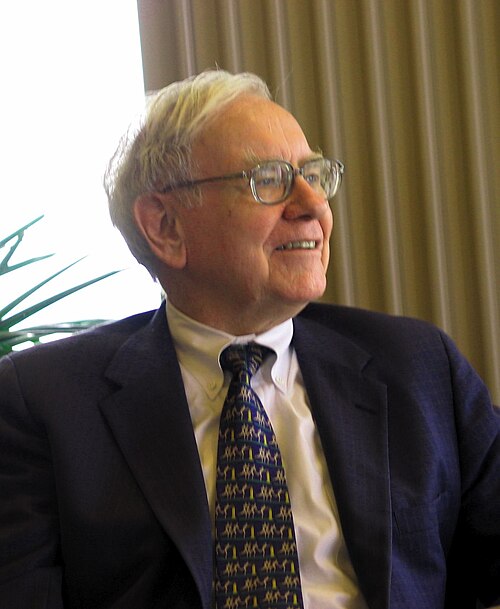
Photo: Mark Hirschey · CC BY-SA 2.0, via Wikimedia Commons
What happened, in plain terms
On 18 September 2026, Berkshire Hathaway announced that Warren Buffett had stepped down as chairman of its board with immediate effect. He took the title of chairman emeritus and remains a director. The board elected his son Howard Buffett, a Berkshire director since 1993, as chairman. Greg Abel continues as chief executive, a job he took over on 1 January 2026 after Buffett announced in May 2025 that he would hand over the top executive role at the end of that year. Susan Decker remains the lead independent director. In his letter to shareholders, Buffett — who turned 96 in August — summed up the decision in four words that travelled quickly: “Father Time always wins.”
Who actually runs Berkshire now
For most of Berkshire’s modern history one man held both of its top jobs. Those jobs are now split, which is how most large US companies are run. The chief executive runs the operating businesses and decides where the money goes. The chairman leads the board, which oversees management on behalf of shareholders. Abel, who came to Berkshire through its energy business and had overseen all of its non-insurance operations since 2018, now does both of the jobs that matter most day to day. Berkshire described Howard Buffett’s role as protecting the company’s culture and values rather than managing its operations, and Buffett said Abel had already been making the important decisions for some time.
- Greg Abel, chief executive since January 2026: runs the operating companies and allocates Berkshire’s capital.
- Howard Buffett, chairman since September 2026: leads the board, with a stated focus on Berkshire’s culture and values.
- Warren Buffett, chairman emeritus: remains a director and, in his own words, a shareholder alongside everyone else.
- Susan Decker, lead independent director: the senior independent voice on the board.
What changes for shareholders, and what doesn’t
The announcement itself changed very little that a shareholder can touch. The share classes are the same, the businesses are the same — insurance, a railroad, energy utilities, manufacturing, retail — and so is the large portfolio of listed shares. Berkshire has historically not paid a dividend, preferring to reinvest its earnings or buy back its own shares, and nothing in the September announcement changed that. The market’s reaction was muted: the Class B shares slipped about 0.3% after the news, a sign that investors had long expected the handover. The underlying businesses were also in reasonable shape: in the three months to June 2026, Berkshire reported operating earnings up 16% to about $13 billion, and the company as a whole is valued at more than $1 trillion.
The more important change happened nine months earlier, when capital allocation — Buffett’s real job for six decades — passed to Abel. That is where investors’ attention now sits. Berkshire reported roughly $365 billion in cash and short-term investments at the end of June 2026, an enormous sum waiting for a use. Whether it goes into acquisitions, listed shares or buybacks will shape shareholders’ returns far more than who holds the chairman’s title.
Why the share price has lagged in 2026
As of mid-September 2026, Berkshire’s Class B shares were up only about 1% for the year, while the S&P 500 had gained roughly 11.5%. Commentators have offered several explanations: a very large cash position earns less than shares in a rising market, the premium investors once paid for Buffett’s judgement may be fading, and a conglomerate this size is hard to grow quickly. None of these is certain. The long-run record is still extraordinary — by Berkshire’s own measure its shares compounded at roughly 20% a year from 1965 to 2025, about twice the S&P 500’s return with dividends — but Buffett himself has warned for years that Berkshire’s size makes anything like that impossible to repeat.
The lesson most investors can actually use
For people who don’t own Berkshire, the more useful legacy is Buffett’s advice, and it is strikingly modest. He has long written that most investors are better served by a low-cost index fund than by paying professionals to pick stocks. He proved the point with a ten-year, $1 million bet for charity from 2008 to 2017, in which an S&P 500 index fund gained about 126% while five funds of hedge funds averaged about 36%. In his letter for 2013 he even described instructions for money left to his wife: 90% in a very low-cost S&P 500 index fund and 10% in short-term government bonds.
If you hold Berkshire shares, the questions worth watching are practical ones: how Abel uses the cash, whether buybacks continue, and how the businesses perform without their founder at the top. If you don’t, the principles travel better than the stock: keep costs low, own businesses you understand or the whole market, and give compounding time. This article is general education, not personal financial advice; for decisions about your own portfolio, speak to a licensed professional.
Warren Buffett’s investment philosophy, explained
How he chooses businesses, the famous $1 million bet, and the simple plan he recommends for most investors.
This article is educational and general in nature. It isn’t personalized investment, tax, or legal advice — always weigh your own circumstances, or talk to a licensed professional, before making financial decisions.
Keep reading
Related guides on this topic.
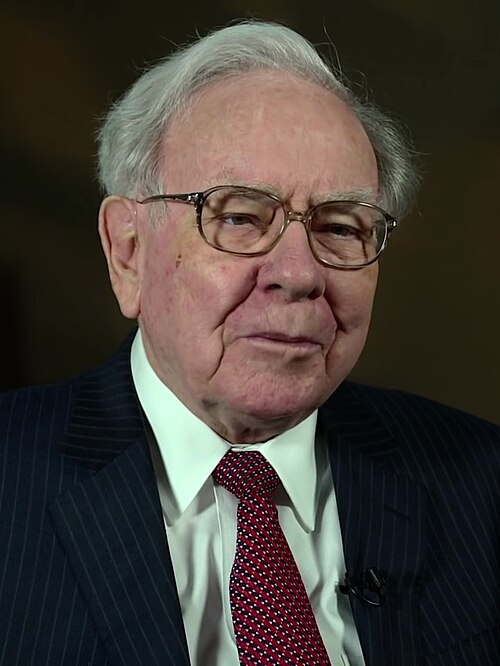 Legendary Investors
Warren Buffett: Investment Philosophy and Track Record
From a Nebraska newspaper delivery boy to the most closely watched investor alive — here's the philosophy behind Warren Buffett's six-decade track record.
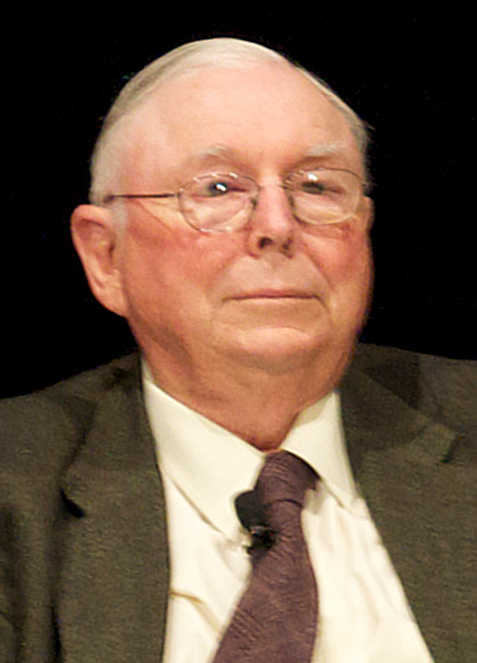 Legendary Investors
Charlie Munger: Mental Models and the Art of Rational Investing
Warren Buffett's longtime partner argued that good investing has less to do with finance formulas and more to do with thinking clearly. Here's his approach.
 Value Investing & Stock Analysis
What Is an Economic Moat? The Competitive Advantages That Protect Profits
An economic moat is what stops competitors from taking a company’s profits. The main kinds of moat, how to spot one in a company’s numbers, why moats erode, and why a great moat does not always make a great investment.
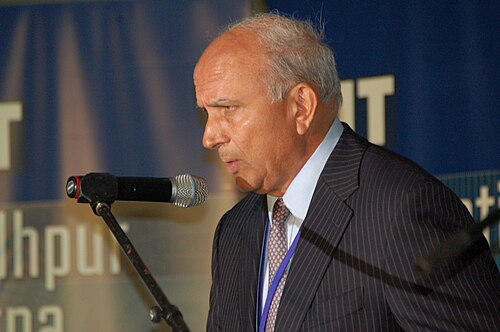 Legendary Investors
Prem Watsa: Fairfax Financial and “Canada’s Warren Buffett”
Prem Watsa arrived in Canada from India with almost nothing, took control of a small trucking insurer in 1985 and built it into Fairfax Financial, a global insurance group run on Buffett-style principles, with some very contrarian bets along the way.
Legendary InvestorsDuan Yongping: The “Chinese Buffett” Who Turned $2 Million in NetEase Into $200 Million
The engineer behind the BBK electronics group retired at 40, moved to the US and became one of China’s most admired investors, buying NetEase near its low, Apple and Tencent. What he did, and what ordinary investors can learn from it.
Legendary InvestorsRaamdeo Agrawal: The Co-Founder of Motilal Oswal and His QGLP Approach to Investing
Raamdeo Agrawal arrived in Mumbai to study accountancy, co-founded Motilal Oswal and became one of India’s best-known long-term investors. His QGLP framework, the Hero Honda and Eicher stories, and the lessons for ordinary investors.